
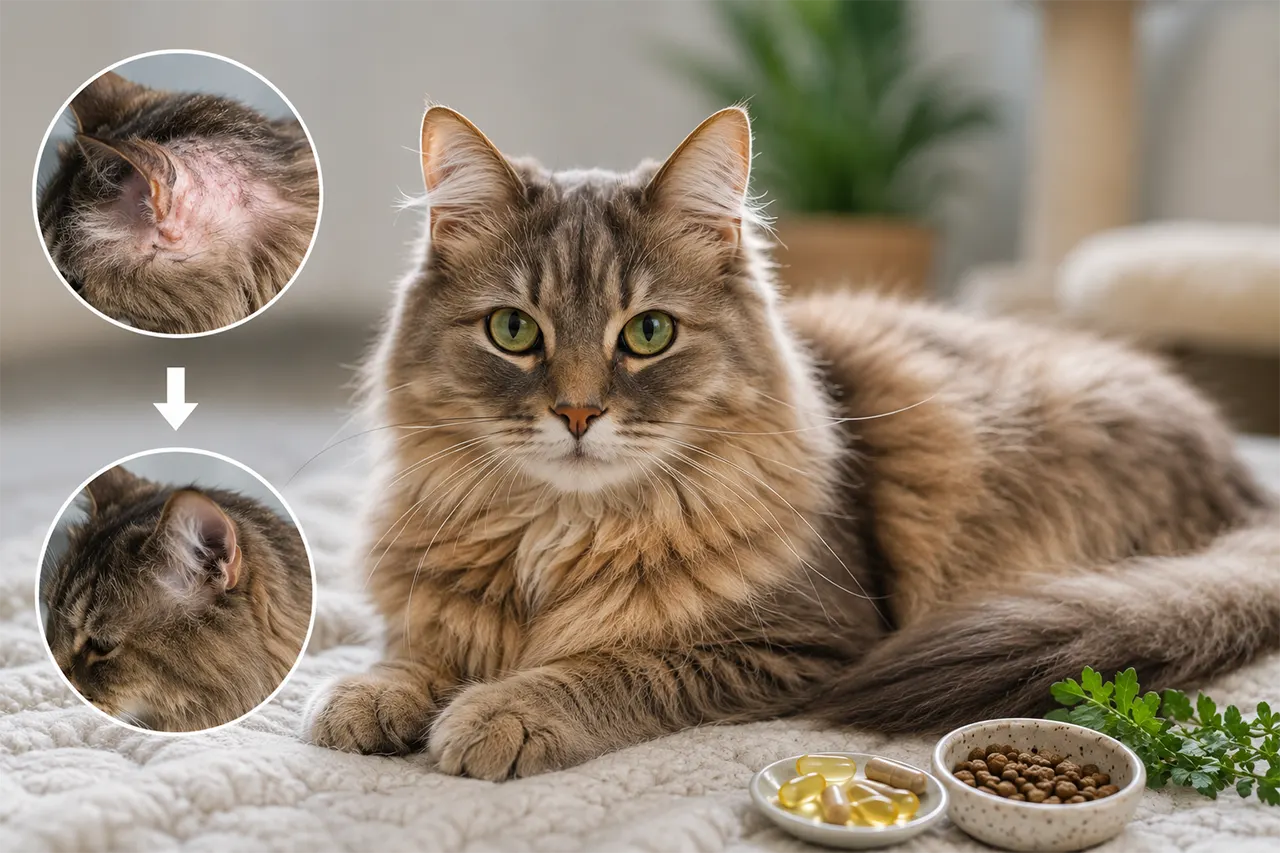
Many cat owners are told their cat's hair loss is simply caused by stress, allergies, or overgrooming.
And while those issues can absolutely contribute, there's another possibility that often gets overlooked:
Nutritional imbalance.
A cat's coat is one of the clearest reflections of their internal health. Healthy fur growth depends heavily on proper mineral balance, protein intake, fatty acids, and overall nutritional status.
When the body becomes depleted in key nutrients, it may begin prioritizing survival functions over coat quality and hair growth. That's often when owners begin noticing thinning fur, bald spots, excessive shedding, or dry, irritated skin.
Research in veterinary nutrition has shown that deficiencies involving zinc, essential fatty acids, protein, and trace minerals may contribute to poor coat condition and alopecia (hair loss) in cats. Zinc in particular plays a major role in skin repair, immune balance, and hair follicle function.
Without proper nutritional support, the skin and hair follicles may struggle to fully recover.
Stress may also play a larger role than many people realize.
Cats experiencing chronic stress or anxiety may place greater demand on their nutritional reserves over time. This may contribute to excessive grooming, poor coat quality, slower hair regrowth, and ongoing shedding.
That's one reason why simply treating symptoms externally doesn't always solve the deeper issue.
Sometimes the body itself may be lacking the nutritional building blocks needed for proper recovery.
In many cases, targeted nutritional support may help improve coat quality, shedding, skin hydration, and fur regrowth, especially when the underlying issue involves nutrient imbalance.
Of course, not all hair loss is nutritional. Parasites, infections, allergies, hormonal problems, and medical conditions should always be properly evaluated by a veterinarian.
But nutrition is often an overlooked piece of the puzzle.
That's why some pet owners are beginning to explore Hair Tissue Mineral Analysis (HTMA) to better understand hidden mineral imbalances and long-term nutritional patterns.
Because sometimes the fur loss isn't just about the fur.
Sometimes it's the body asking for deeper support.

BioTestMe turns mineral data into personalized guidance that supports better health, healthy aging, and more years together.
BioTestMe staff are not medical doctors or veterinarians. Our tests, reports, and guidance are intended for educational and wellness purposes and are not intended to diagnose, treat, cure, or prevent disease. They do not replace professional medical or veterinary advice, diagnosis, or treatment. Nothing provided by BioTestMe is intended to discourage you from seeking or following the advice of a medical doctor for yourself or a veterinarian for your pet.


