
Most pet owners assume that if their dog, cat, or horse has "normal blood work," everything must be fine.
But many pets continue struggling with:
...even when standard labs appear normal.
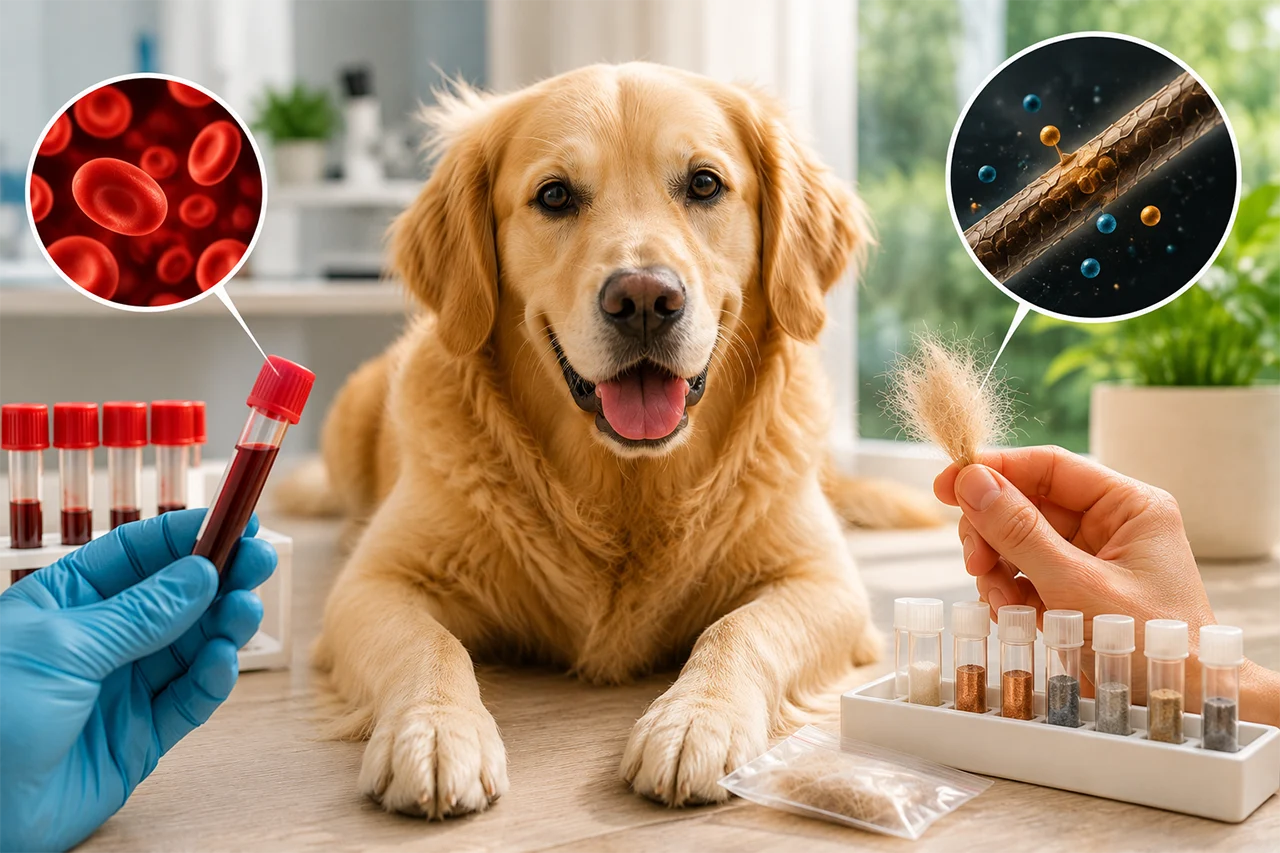
That's because traditional blood testing and Hair Tissue Mineral Analysis (HTMA) measure completely different things.
And understanding that difference may completely change how you look at your pet's health.
Blood work is incredibly valuable.
It can help evaluate:
But blood is tightly regulated by the body because survival depends on maintaining stable blood chemistry.
In other words:
The body will often pull minerals from tissues, bones, organs, and storage sites just to keep blood levels appearing stable. Researchers have discussed this phenomenon extensively in mineral homeostasis literature. (nih.gov)
That means a pet may still have deeper mineral imbalance patterns even when blood levels appear "normal."
Unlike blood testing, HTMA evaluates mineral deposition within the hair over time.
Hair acts more like a "storage tissue," potentially reflecting longer-term mineral patterns, toxic element exposure, and stress-related trends.
Research has shown that hair mineral analysis may provide insight into chronic mineral status and environmental toxic exposures that are not always visible in serum testing alone. (pubmed.ncbi.nlm.nih.gov)
This is one reason hair testing has gained attention in both human and veterinary wellness circles.
Many chronic pet symptoms develop slowly over time.
For example:
These issues may involve long-term stress patterns, mineral depletion, or toxic element accumulation that snapshot blood tests may not fully capture.
Hair testing may help reveal:
One area where HTMA becomes especially interesting is toxic element screening.
Hair testing may help identify longer-term exposure patterns involving elements such as:
Research has shown hair analysis can be useful for evaluating chronic exposure to certain toxic elements because hair may accumulate these substances over time. (who.int)
Blood testing often reflects more recent or acute exposure, while hair may provide a broader historical picture.
This is important:
HTMA is not designed to replace veterinary blood work.
They serve different purposes.
Blood testing is extremely valuable for acute medical evaluation and disease monitoring.
HTMA offers a different layer of insight, one focused more on long-term mineral balance, stress patterns, and toxic element exposure.
Together, they may provide a more complete picture of your pet's health.
Many pets slowly adapt to imbalance for years before symptoms become severe.
That's why more pet owners are beginning to look deeper, beyond symptoms alone.
Because sometimes the issue isn't simply aging.
Sometimes the body may be struggling underneath the surface long before major disease appears.
Sources:

BioTestMe turns mineral data into personalized guidance that supports better health, healthy aging, and more years together.
BioTestMe staff are not medical doctors or veterinarians. Our tests, reports, and guidance are intended for educational and wellness purposes and are not intended to diagnose, treat, cure, or prevent disease. They do not replace professional medical or veterinary advice, diagnosis, or treatment. Nothing provided by BioTestMe is intended to discourage you from seeking or following the advice of a medical doctor for yourself or a veterinarian for your pet.


